
Digital Literacy in Early Years: It’s About Pedagogy, Not Screens
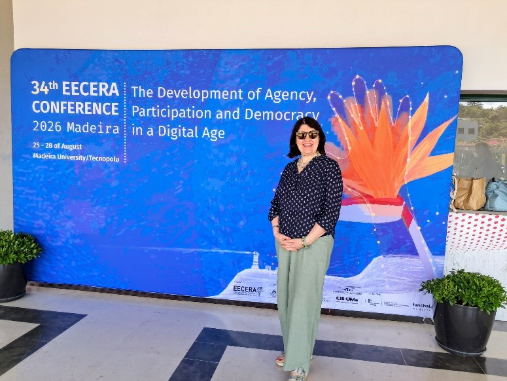
Even in a digital age, nobody goes to a good conference without a notebook. I spent three days at the 34th EECERA Conference at the University of Madeira…
November 24th 2026
Last week I spent a fascinating day at the British Library for Keeping Your Curriculum Broad and Balanced: Celebrating the Arts and Humanities in Primary Schools, organised by the UCL Helen Hamlyn Centre for Pedagogy, where I sit on the Advisory Group.
Two speakers particularly caught my attention, Lauren Child and Pete Moorhouse, who reminded us that creativity is not simply about making beautiful things. It is about learning to think, question, imagine, persevere and sometimes do absolutely nothing! Maybe, we adults need to rediscover the art of being a little bored ourselves!
Lauren Child spoke about the importance of boredom. Not the miserable sort, but the space it creates for ideas to float about, for our brains to settle and for imagination to get to work. In a world where children are constantly entertained, stimulated and hurried along, perhaps we have forgotten the value of leaving a little room for nothing to happen. After all, nothing is often where something interesting begins.
She also reminded us of the power of books to open up impossible possibilities. And who better to illustrate this than Pippi Longstocking, that wonderfully anarchic child who refuses to be constrained by adult expectations? Lauren also shared some wonderful examples of her early work and the rejections she faced, including those who were prepared to accept her ideas, provided she changed them! But she held on to her creative vision. It was a lovely reminder that creativity also requires courage, conviction and a willingness to resist being squeezed into someone else’s idea of what is acceptable. Perhaps there is a lesson for education there too. How often do we encourage children to be creative, but only as long as their creativity fits our expectations?
Pete Moorhouse brought us back to the importance of children working with their hands. Woodwork, tools, designing, making, getting things wrong and trying again. All those experiences that develop mathematical thinking, physical skills, concentration, collaboration and problem-solving. There is something deeply satisfying about making something real, especially when you have had to wrestle with a few problems along the way. He shared some great photos where the joy and perseverance and sense of satisfaction shone out.
He also explored the power of photography. Giving children cameras and allowing them to notice what adults often walk straight past. Shadows, reflections, textures, tiny details, the extraordinary hiding in the ordinary. It made me think about how much we learn when we slow down and allow children to direct our attention rather than constantly directing theirs.
We also heard about the importance of singing, not simply because it brings joy, although that would be reason enough, but because rhythm, repetition and melody support language, memory, listening and communication. For children learning English alongside another language, singing can offer an inclusive and less anxious way to participate and learn. Of course, songs need thoughtful teaching and scaffolding, not simply a cheerful singalong. This aligns with the recent finding on the power of nursery rhymes and knowing 8 to 10 really well.
What struck me throughout the day was the social justice dimension of creativity. Not every child has access to tools, books, musical experiences, cameras or adults who have the time and confidence to encourage their curiosity. If we narrow the curriculum, it is often children with the fewest opportunities outside school who lose the most.
At LEYF, we have long argued that children learn through their bodies, relationships, environments and experiences. Creativity runs through all of these. It is not an enrichment activity to be squeezed in when the serious learning is finished. It is serious learning.
So perhaps the question is not whether we can afford to make more room for creativity in our nurseries and schools, but whether we can afford not to. Do something!
Even in a digital age, nobody goes to a good conference without a notebook. I spent three days at the 34th EECERA Conference at the University of Madeira…
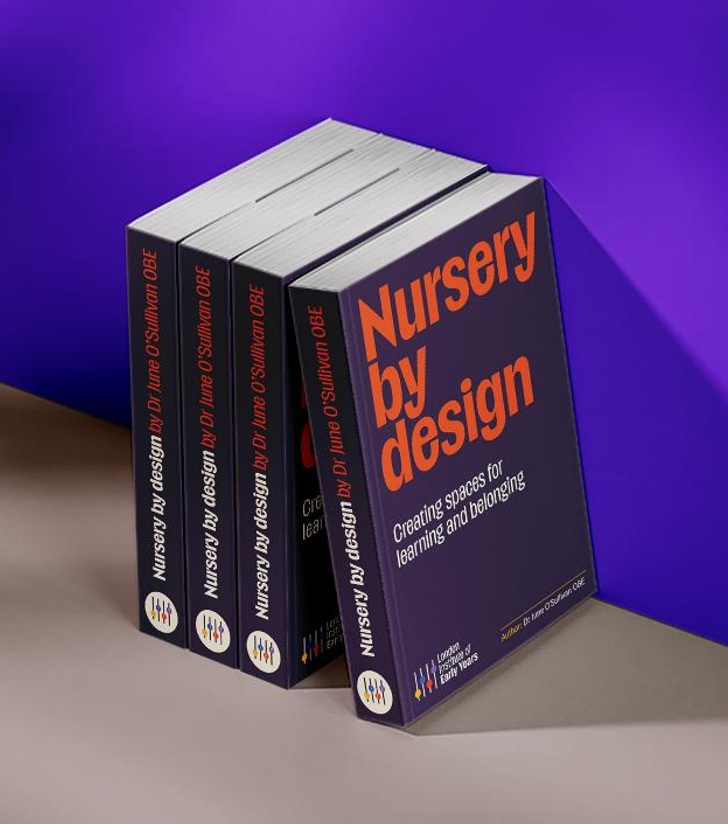
The idea for this book began many years ago with my own daughter. Like many young children, she found saying goodbye in the morning difficult. She wanted one last wave…

There are some books that arrive at exactly the right moment, and Babies’ and Toddlers’ Rights in Practice by Mary Moloney,…