
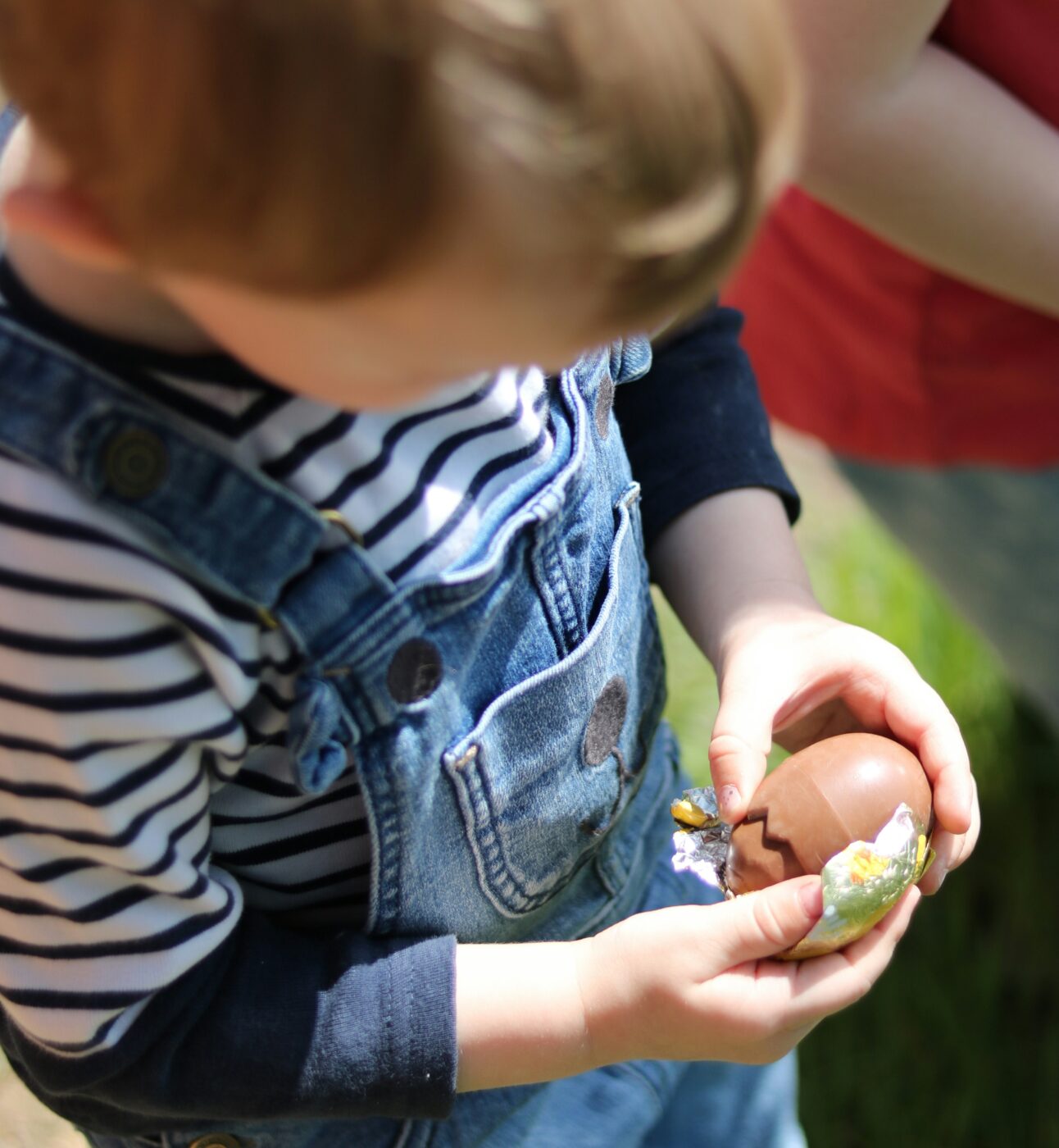
The Great Easter Egg Sugar Rush
Easter is approaching and soon the whole country will be joining in a massive Easter Egg hunt. Not the spiritual kind, nor the nostalgic kind, but a fully…
April 7th 2026
It was timely when Clare Devlin asked whether I would review her new book, Observation Assessment Made Simple. I had just been talking to a colleague who told me that observation is no longer considered an essential part of some apprenticeship training programmes.
That genuinely shocked me.
For me, one of the clearest indicators of an effective early year’s teacher/ educator is the ability to observe well: to notice deeply, interpret thoughtfully, and see one step ahead of what may be happening in a child’s learning and development. Observation is not an optional extra. It is at the heart of good pedagogy.
That is why I was pleased to read this book. It is light in tone, easy to navigate, and highly accessible for apprentices, students and those early in their careers. It has all the hallmarks of a modern professional text: short chapters, clear headings, practical structure, and plenty of space for reflection. In that sense, it feels well suited to today’s learners and to the realities of busy practice.
The book is organised in a way that naturally prompts reflective thinking through Borton’s (1970) model: What? So what? Now what? This makes it especially useful not only for individual readers, but also for staff development sessions, team discussions, and training workshops.
My favourite chapter was always going to be the one that framed observation as a pedagogical tool. That, to me, is where the book is at its strongest. Clare Devlin does not treat observation as a bureaucratic exercise or a mechanism for collecting evidence. Instead, she reclaims it as a way of understanding children and shaping responsive teaching.
For those of us who remember the old NNEB days, with their formidable number of required observations, the book also offers a useful moment of reflection. Clare carefully unpacks the purpose of observation and reminds us what can be lost when it becomes reduced to checking off what a child knows against a pre-set topic or target. As she argues, some approaches can become unintentionally misdirected, reducing observation to the task of checking what a child knows in relation to a topic. While that may have a place in summative assessment, it does not tell the full story of how children make meaning, test ideas, and uncover learning for themselves. That, for me, captures the ethos of the book perfectly.
Clare’s explanation of the What? So what? Now what? process is particularly helpful. First, describe what you see and hear, staying close to the facts and to the ordinary moments of everyday nursery life. Then consider what those observations tell you about the child’s learning and development in relation to your curriculum and developmental understanding. Finally, think about next steps: what might you do, offer, or say to support the child’s continuing development?
This may sound basic, but perhaps that is exactly the point.
When I speak to learning and development teams, I often hear the same message: we are going back to basics. That feels important. Too many students, newly qualified staff and even graduates have not had enough grounding in these core ideas. In some settings, digital tools and apps have also shifted the purpose of observation. Teachers and educators may spend time recording moments for parents, telling the story of the day, but not always evaluating what those moments reveal about a child’s progress, interests or patterns of learning.
This book helps to reopen that conversation.
I particularly appreciated Clare’s argument that adults should take time to observe with intention and to listen deeply, without rushing to label, diagnose or fix. That feels especially relevant at a time when children can too quickly be defined by needs, categories or concerns, when sometimes what they need most is time, sensitive attention, and the space to become who they are becoming.
Clare writes that effective observation systems underpin meaningful assessment and planning. They help teachers and educators create rich, developmentally appropriate environments and shape relevant, engaging experiences. That sounds simple on the surface, but as anyone in the sector knows, it is anything but simple. Observation is skilled work. It requires judgement, knowledge, patience and reflective dialogue.
I also liked the way the book values continual observation: the ongoing habit of noticing, thinking and revisiting, rather than assuming every observation must be formally named or recorded. Some of the richest understanding often comes later, in discussion with colleagues, when you revisit what you saw and suddenly have that small but powerful “a-ha” moment.
That is why this book could be particularly useful in staff meetings. It lends itself well to shared reflection about individual children, their interests, learning dispositions, and possible next steps. In mixed-age or shared-age spaces, which more nurseries are now developing, that sort of team-based thinking becomes even more important.
There are several practical ideas in the book that I found helpful, including the distinction between seeing, not judging and noticing, not prematurely interpreting. I liked that very much. It aligns closely with my own interest in children’s voice, belonging and participation. Observation should help us attend more carefully to children’s lived experience, not simply fit them into predetermined boxes.
Clare is also realistic about the challenges. She acknowledges that observing outdoors or in larger groups can be complex. I would go further and say that observation in the ordinary rush of nursery life is often difficult everywhere, indoors as well as out. That is why any book that takes these realities seriously is welcome.
Chapter 9, which focuses on the “So what?” of the process, is especially worth reading. It asks important questions about how settings analyse observations and whether their assessment practices are realistic, useful and proportionate. This matters because, historically, we have swung between extremes: too many written assessments at one point, then increasingly digital systems that sometimes drift into parent communication rather than professional interpretation of children’s learning.
Clare also touches on AI, which is timely. She sensibly explores its possibilities while raising the right questions. Used carefully, AI may support reflection, but we must be very cautious that it does not deskill teachers /educators. Early years staff need to be able to observe, interpret and articulate children’s learning for themselves. A generated analysis should never replace professional judgement.
Another chapter I especially enjoyed was the discussion of flow, drawing on the work of Csikszentmihalyi (1990), as well as Ferre Laevers’ work on involvement. This is one of the richest parts of the book because it brings observation alive. Clare describes involvement through concentration, energy, creativity, facial expression, posture, persistence, precision, language and satisfaction. These are exactly the kinds of subtle but telling signs that help practitioners understand when children are truly engaged in deep learning. For those of us who have long valued Laevers’ work, this is a welcome inclusion.
Ultimately, that is the real purpose of assessment. We do not assess simply to tell a story, complete a form, or tick a box. We assess because it helps us understand child development. It sharpens our professional thinking. It helps us connect what we know about children’s development with what is unfolding in front of us. When assessment is done well, it makes children’s learning more visible and our teaching more responsive.
The second half of the book turns to planning, another area that has changed repeatedly over the years in response to policy, research, and the increasing pressures of practice. Clare handles this well. She recognises the tension between the ideal of reflective, responsive pedagogy and the reality of busy settings where staff are stretched and documentation can feel overwhelming.
She is right to show that planning, teaching, observing, reflecting and assessing are not separate tasks but deeply connected professional acts. To be a pedagogue, you need to understand child development, curriculum, teaching and learning as an integrated whole. This book makes that clear.
I was also pleased to see a reminder of SPICE: social, physical, intellectual, communication and emotional development. That framework still offers a helpful way of appreciating the complexity of children’s experiences, and I welcomed its inclusion.
The conclusion pulls the key themes together well, and there are downloadable templates for those who like practical tools. Personally, I would advise caution here. Any format or proforma needs to work for the setting and the practitioner, not the other way round. Too often, a model becomes so cumbersome that observation turns into a checklist rather than a thoughtful professional process.
Overall, this is a warm, accessible and useful book. It is easy to read, grounded in respect for children’s learning, and full of material that would support students, apprentices, room leaders, teachers and managers. I would particularly recommend it as a text to use in staff development sessions, where teams can read selected chapters together and compare the ideas with their current practice.
At a time when some appear to be stepping away from observation as a core professional skill, this book is a timely reminder that observation remains central to excellent early years practice. Indeed, given the complexity of children’s lives and the pressures on settings today, I would argue that good observation matters more than ever.
You can buy Clare Devlin’s book here.
Observation in early years education is the process of watching, listening and documenting children’s behaviour, play and interactions to understand their development and learning.
Observation helps educators assess development, plan next steps, and create responsive learning environments tailored to each child’s needs and interests.
It is a reflective framework used in early years practice:
Digital tools have made recording easier but can shift focus towards documentation for parents rather than meaningful assessment of children’s learning.
This book is ideal for early years teachers, educators, apprentices, students, nursery managers and anyone involved in child development and assessment.
You can buy Clare Devlin’s book here.
Easter is approaching and soon the whole country will be joining in a massive Easter Egg hunt. Not the spiritual kind, nor the nostalgic kind, but a fully…
Context: Why ESG Is Rising Up the Agenda I joined an audience of charities and investors at the ESG Imperative Conference, organised by…
There are some books that arrive at exactly the right moment, and Babies’ and Toddlers’ Rights in Practice by Mary Moloney,…