
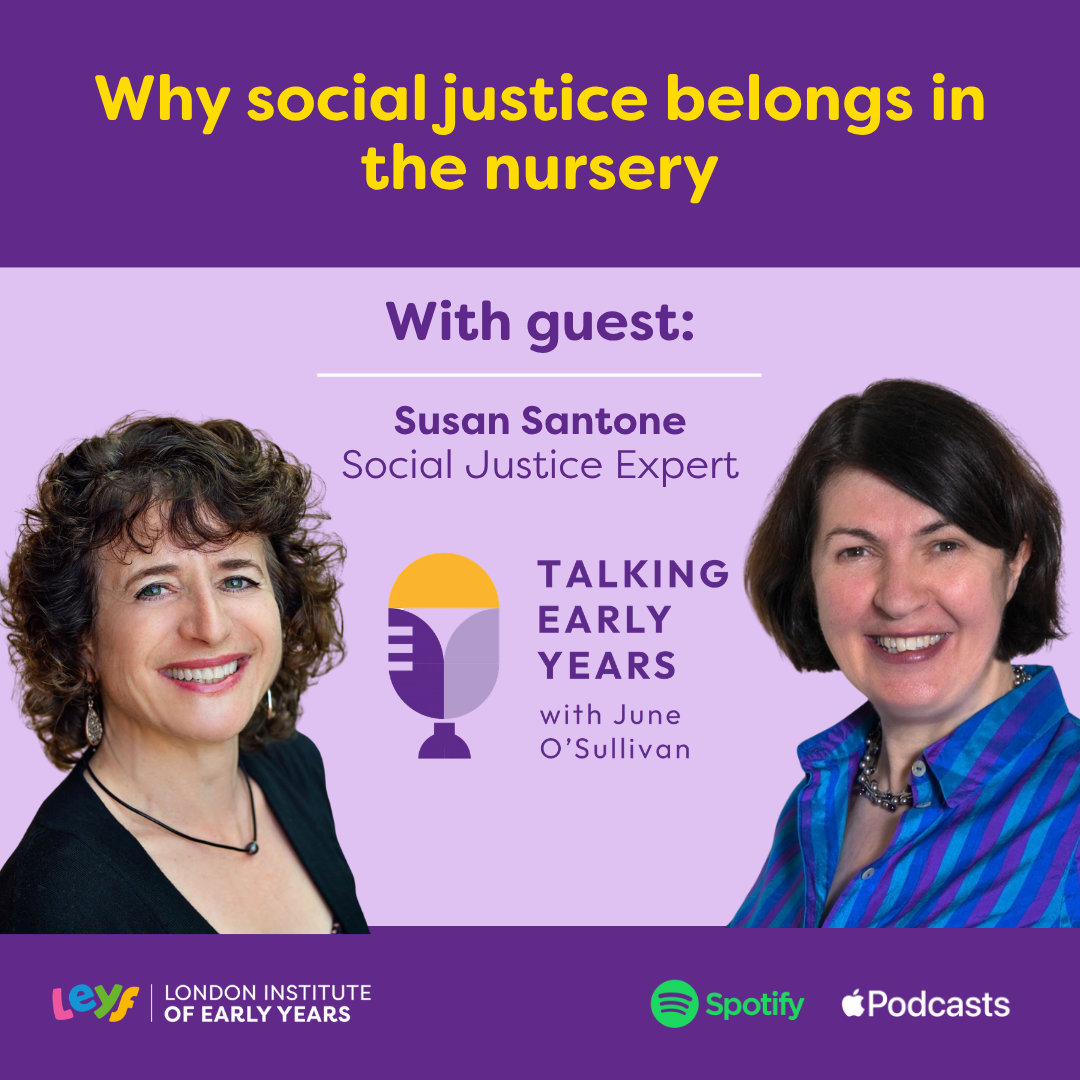
In Conversation with Susan Santone: Why Social Justice Belongs in the Nursery
Why listen to this podcast? Understand why social justice begins in the nursery, not later in life Reflect on how fairness, empathy and belonging are…
April 10th 2026
In our latest podcast, I sat down with digital safety expert Katy Potts to confront what many of us are reluctant to say out loud. There is no app to replace your lap.
Children do not need screens to learn songs, build language or feel connected. We already hold the most powerful tools in our voices, our relationships, our presence. Yet platforms like YouTube, now one of the most used by young children, are designed for endless consumption. Short, fast, addictive content. It may look harmless, even entertaining, but beneath the surface it is shaping habits, wiring expectations and quietly eroding wellbeing.
Giving a young child unrestricted access to digital technology is like handing them a vape. It normalises dependency before they have the capacity to understand or resist it.
Katy shares the growing evidence around “technoference”, the way devices interrupt relationships, and why there is still no credible evidence of benefit for under-fives. She is not alone. This week, Greece joined Australia in taking decisive action to curb children’s access to digital platforms. Here in the UK, we are still hesitating. Current Department for Education guidance already urges a cautious approach, emphasising that for children under five, screen use should be minimal and never replace high-quality interaction with adults.
There is growing leadership in this space. Baroness Penn, former Parliamentary Under-Secretary of State at the Department for Digital, Culture, Media and Sport, has been a strong advocate for online safety through her work on the Online Safety Act, pushing for greater accountability of tech platforms and stronger protections for children.
Practical guidance is also available. The London Grid for Learning provides safeguarding resources tailored to early years settings, helping educators manage online risks. The National Cyber Security Centre, part of GCHQ, offers advice on protecting digital systems and data in nurseries and schools. Local authorities, including Islington, are also producing accessible guidance to support teachers and educators, as well as parents. We have the tools. We have the evidence. Other countries are acting.
Current guidance suggests that for children under five, screen use should be minimal and never replace high-quality interaction with adults.
There is still no credible evidence of developmental benefit for under-fives from screen use alone.
Technoference refers to the way digital devices interrupt relationships, reducing the quality of interaction between children and adults.
Unrestricted access can encourage dependency, expose children to addictive content, and shape habits before they have the capacity to understand or resist it.
Follow UK guidance, prioritise real-world interaction, and use available safeguarding resources to manage digital exposure carefully.
Why listen to this podcast? Understand why social justice begins in the nursery, not later in life Reflect on how fairness, empathy and belonging are…

Why listen to this episode? Understand why children’s voices are a right, not a reward Learn how the Lundy Model supports meaningful child…

Why listen to this episode? Hear directly from Professor Barbara Rogoff on sociocultural learning and how children learn through participation Explore why culture and…