
What makes a well-designed nursery?
A parent's guide.
When choosing a nursery, parents often focus on location, opening hours, Ofsted ratings and availability. But one of the most important things to consider is the nursery environment itself.
How does the nursery feel when you walk in?
Is it calm, welcoming and well organised?
Can children move freely? Are there places to play, explore, rest and connect with others?
According to our CEO, Dr June O’Sullivan OBE, author of Nursery by Design, the environment is much more than a backdrop to learning. It is key to how children learn.
Nursery design is about learning, not decoration
A well-designed nursery does far more than look attractive. It supports children’s learning, communication, confidence, wellbeing and sense of belonging.
The best nursery environments are calm, purposeful and child focused. They encourage curiosity, conversation, independence and exploration while limiting noise, clutter and distraction.
As June O’Sullivan writes, “The aim is to create a peaceful learning space.”
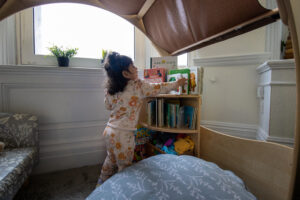
Calm nursery environments help children thrive
Young children are highly sensitive to their surroundings. Too much noise, clutter or visual stimulation can make it harder for them to focus, communicate and regulate their emotions.
That is why good nursery environments use colour carefully, think hard about acoustics, provide cosy spaces to retreat to and keep resources organised and accessible.
June O’Sullivan says, “Sound is inseparable from space.”
When children can hear one another, process sound, engage in conversation and focus on what matters, learning becomes deeper and more meaningful.
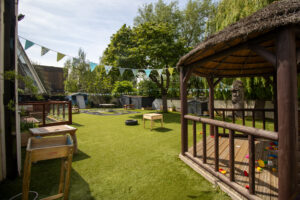
Outdoor learning is an essential part of nursery design
Outdoor space is not an optional extra. It is a vital part of children’s development.
Outdoor play spaces allow children to move and play in ways that are different from indoors. They build healthy bodies, support eyesight, and help children develop strength, balance, coordination and confidence. Gardens provide opportunities to dig, grow, investigate, observe wildlife and connect with nature.
At LEYF nurseries, children have access to outdoor spaces and nursery gardens in all weathers, where they notice seasonal change, enjoy the wind, lie under the trees and experience the natural world. They also explore their local environment by visiting parks and green spaces and are encouraged to become environmental stewards.
Independence starts with the nursery environment
A good nursery environment tells children: “You are capable.”
Low-level shelves, accessible books, labelled baskets and child-height resources allow children to make choices, solve problems and take responsibility for their environment.
When children can access resources independently, they develop confidence, a sense of ownership and a love of learning.
Less clutter, more learning
More resources do not always lead to better learning.
Children can quickly become overwhelmed by busy, cluttered environments. Thoughtfully organised spaces help them understand the flow of the environment so they can navigate it with confidence. This builds independence and encourages children to value and care for their surroundings.
June O’Sullivan writes, “Disorganised places for children are disrespectful places.”
Food is part of learning
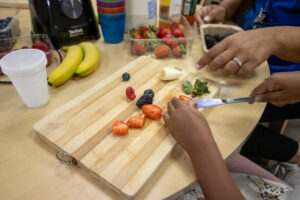
At LEYF, food is viewed as an important part of the learning experience.
Children get to know their chef, talk about food and, in many nurseries, take part in menu-planning meetings where they suggest favourite foods and negotiate additions to the menu.
Mealtimes are social occasions where children learn how to behave, help set the table, serve food, have conversations and build independence while learning together.
Good nursery environments support adults too
Children benefit when the adults around them also feel comfortable and supported.
Natural light, thoughtful layouts, good acoustics and welcoming staff spaces help Early Years Teachers focus on building strong relationships and supporting children’s learning.
Great nursery design works for everyone.
A nursery should reflect its community
No two LEYF nurseries look exactly the same.
Each one reflects its geography, history and nursery community. Creating a sense of identity and belonging starts from the moment families arrive. Children’s artwork, family photographs, artefacts and objects help celebrate the community and create meaningful connections.
A nursery is not simply a building. It is part of a community.
Why good nursery design matters
For June O’Sullivan, nursery design is ultimately about fairness.
Every child deserves access to an environment that supports learning, wellbeing, curiosity and belonging, regardless of where they live.
As she writes, “Thoughtfully designed nurseries do more than house learning. They actively teach values of fairness, care, agency and belonging.”
When environments are designed well, children do not just learn in them.
They learn from them.
Discover more
June O’Sullivan’s new book explores how nursery environments shape children’s learning, wellbeing and sense of belonging, drawing on research and practical examples from LEYF nurseries across London.
Order your Nursery by Design book now
Frequently Asked Questions
What makes a well-designed nursery?
A well-designed nursery supports children’s learning, wellbeing and development through calm, organised spaces that encourage independence, communication, exploration and a sense of belonging. Good nursery design focuses on how children learn rather than simply how a space looks.
Why is the nursery environment important?
The nursery environment shapes how children learn, play, communicate and build relationships. Calm, welcoming and thoughtfully organised spaces help children feel secure, confident and ready to explore.
Why is outdoor learning important in a nursery?
Outdoor learning helps children develop physical strength, coordination, confidence and resilience. It also encourages curiosity, supports healthy development and gives children opportunities to connect with nature throughout the year.
How does nursery design encourage independence?
Accessible resources, child-height furniture, labelled storage and thoughtfully organised learning spaces allow children to make choices, solve problems and take responsibility for their environment, helping them build confidence and independence.
What should parents look for when visiting a nursery?
Parents should look for a nursery that feels calm, welcoming and organised. Notice whether children can move freely, access resources independently, enjoy outdoor play, and whether the environment supports learning, wellbeing and a sense of belonging.